
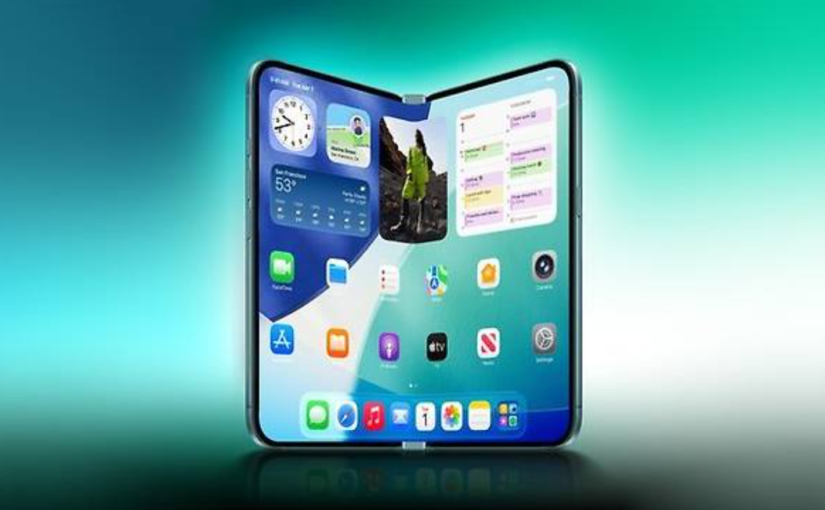
Apple’s long-rumored foldable iPhone—often referred to as the “iPhone Fold”—is quickly moving from speculation to reality. As multiple reports converge, 2026 is shaping up to be a pivotal year not just for Apple, but for the entire foldable smartphone market.
Expected Release Timeline
The expected launch window for Apple’s first foldable iPhone varies slightly depending on the source, but the overall direction is clear. Analyst Ming-Chi Kuo has suggested a possible release as early as the second quarter of 2026, while Bloomberg points to a late-2026 or early-2027 debut. More recent supply chain insights indicate that Apple is targeting September 2026, aligning the foldable iPhone with the iPhone 18 Pro lineup.
This timing would allow Apple to introduce the device as a flagship product rather than an experimental side release. However, delays remain possible due to manufacturing complexity, durability challenges, and yield issues—common hurdles in foldable device production.
Design and Display
Apple is expected to adopt a book-style folding design similar to existing foldable devices on the market. When unfolded, the internal display is rumored to measure around 7.7 to 7.8 inches, while the external display may range between 5.3 and 5.5 inches for one-handed usability.
One of the most anticipated features is the use of Samsung’s advanced crease-minimizing OLED panel. If implemented successfully, this could significantly improve visual quality and reduce one of the biggest drawbacks of current foldable phones—the visible crease.
In terms of physical dimensions, Apple is reportedly aiming for a thickness of approximately 9 to 9.5 mm when folded and just 4.5 mm when unfolded, making it one of the thinnest foldable smartphones ever produced.
Performance and Hardware
Under the hood, the iPhone Fold is expected to feature Apple’s next-generation A20 Pro chip, built on a 2nm process. This chip may incorporate WMCM (Wafer-Level Multi-Chip Module) packaging, enabling RAM to be integrated directly into the logic board. The result would be improved performance, lower latency, and enhanced power efficiency—especially important for AI-driven tasks.
The device is also expected to include 12GB of LPDDR5 RAM, reflecting the growing importance of on-device AI processing and multitasking on larger screens.
Camera and Biometrics
The camera system is likely to include four lenses: a 48MP main camera, an ultra-wide lens, a punch-hole front camera on the external display, and an under-display camera on the internal screen.
Interestingly, Apple may move away from Face ID for this model. Instead, Touch ID could be integrated into the power button, offering consistent authentication whether the device is folded or unfolded. This approach would also help simplify internal design and eliminate the need for display cutouts like the notch or Dynamic Island.
Build Quality and Battery
To address durability concerns, Apple is expected to use a liquid metal hinge, which could significantly enhance structural strength and longevity. Battery capacity is rumored to exceed 5,000mAh, ensuring sufficient power for a large dual-display device.
Pricing Expectations
The iPhone Fold is expected to carry a premium price tag. Most estimates place it above $2,000, with some projections ranging between $2,100 and $2,300. This positions it above the current iPhone Pro Max models and closer to high-end MacBooks or iPads.
While this pricing may limit mass adoption initially, it reinforces Apple’s strategy of positioning the device as a high-end flagship rather than a niche experiment.
Impact on the Foldable Market
Apple’s entry into the foldable segment is expected to significantly reshape the market. According to industry forecasts, the global foldable smartphone market could grow by around 20% in 2026, surpassing 30 million units in annual shipments.
Currently dominated by Samsung and Huawei, the market may soon transition into a three-player competition. Projections suggest that Apple could capture around 28–30% market share shortly after launch, reducing Samsung’s share from around 40% to the low 30s and Huawei’s from 30% to the low 20s.
In North America, Apple’s impact could be even more dramatic, with estimates suggesting it may immediately take the leading position in the foldable segment.
Competition and Industry Response
Samsung is expected to respond aggressively by expanding its foldable lineup and introducing new form factors, including multi-fold devices like the Galaxy Z Tri-Fold. Huawei is also preparing next-generation foldables, including models that closely resemble Apple’s anticipated design.
However, the competition in 2026 is unlikely to be defined solely by hardware. Instead, software optimization and AI integration will play a crucial role. Apple’s strength lies in its ecosystem and experience with large-screen optimization through iPadOS, which could translate into a more refined foldable user experience.
A Turning Point for Foldable Smartphones
Apple’s foldable iPhone is more than just another product launch—it represents a potential turning point for the entire category. By entering the market with a polished, high-performance device, Apple could elevate foldables from a niche innovation to a mainstream flagship standard.
If the current reports hold true, 2026 may mark the beginning of a new era in smartphone design—one where foldable devices are no longer optional experiments, but central to the future of mobile technology.